
從登機到看電影,從空間到行銷:一場結合品牌體驗的空間設計 From Check-In to Showtime: A New Chapter in Cinema Design
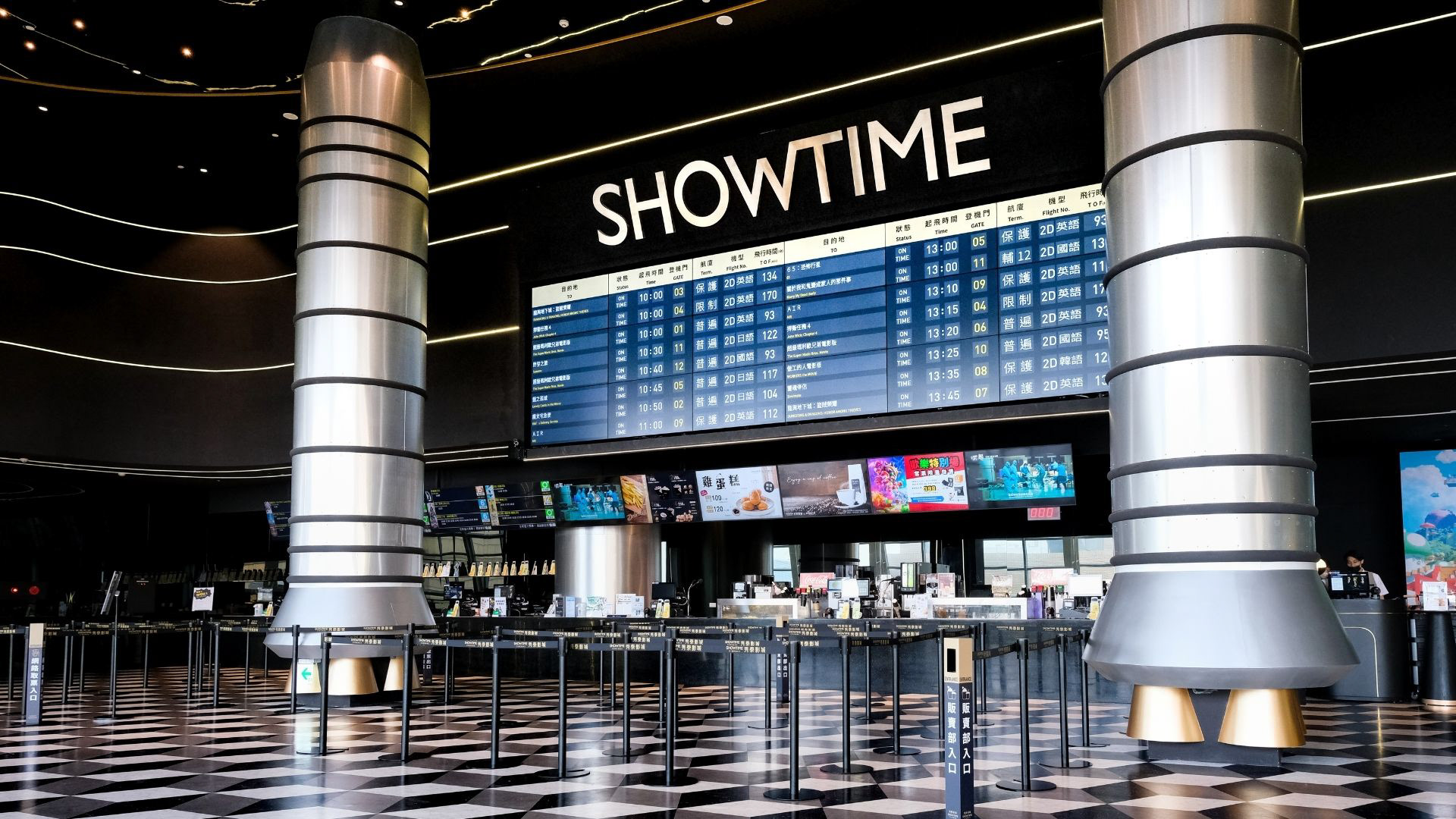
挑高的迎賓大廳如同國際機場的出境航廈,兩側巨型金屬柱體象徵引擎與推進力,中央則是「航班資訊顯示板」造型的節目表,電影場次化身航班班次,一場場即將啟程的觀影旅程就此展開。
The soaring lobby resembles the departure hall of an international airport, where towering metallic columns on both sides symbolize engines and thrust. At the center, a flight information-inspired display board schedules screenings like flight departures—each movie an upcoming journey, ready for takeoff.
2022年,在疫情與串流影音雙重夾擊下,傳統電影院的存在價值正面臨前所未有的挑戰。觀影行為的轉變、生活節奏的重塑,使「看電影」不再是一種日常,而是一場需要被重新定義的體驗。
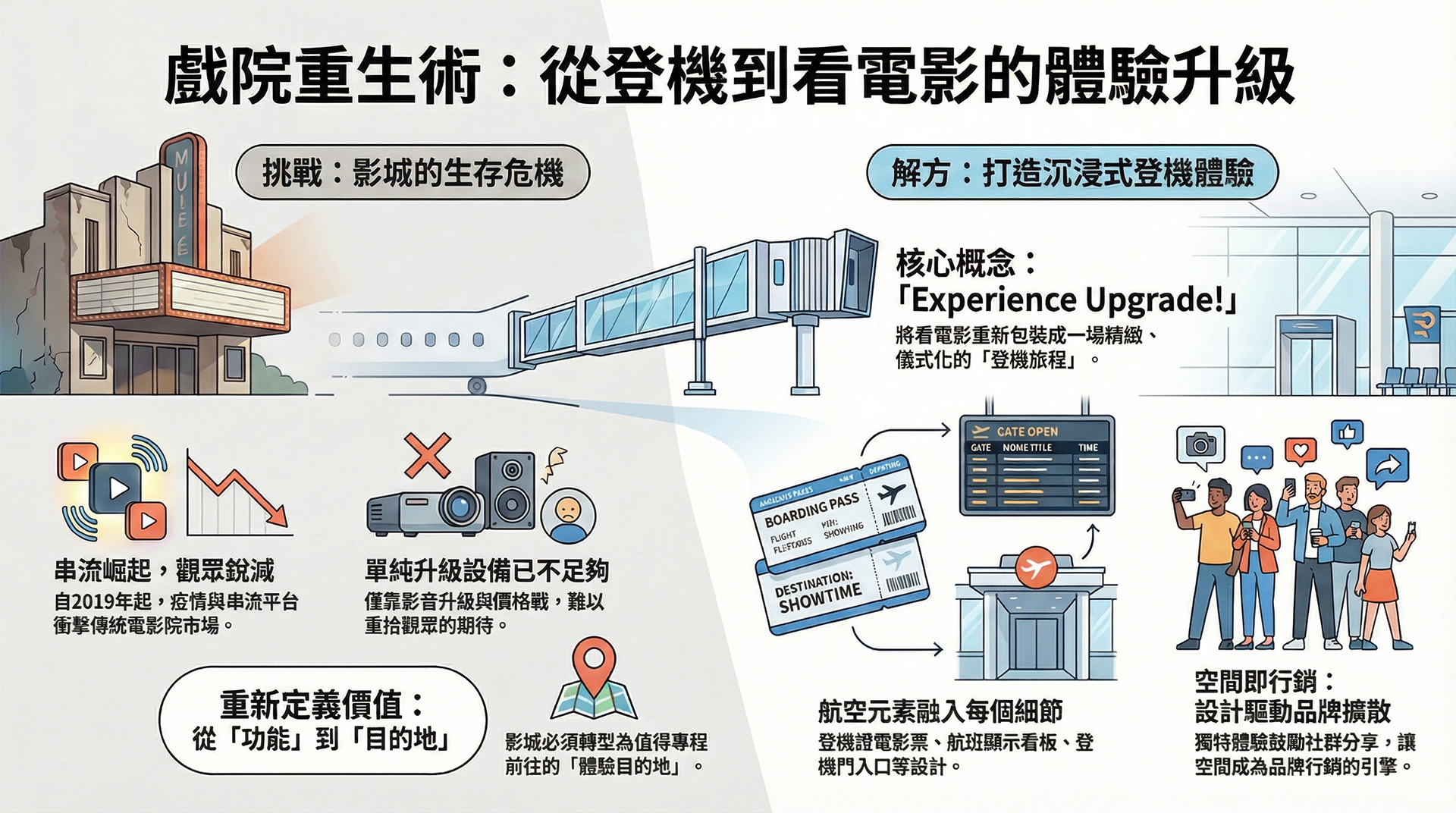
面對這場轉型浪潮,擬定新策略,一張模擬登機證的電影票、一道仿登機閘門的入場動線、一處設計感十足的打卡牆,將觀影體驗「升等」為一段「登機旅程」,大銀幕尚未亮起,故事早已從空間開始說起。而這些體驗,在社群分享的過程中,自然轉化為品牌擴散的引擎。
In 2022, under the dual pressure of the pandemic and the streaming boom, traditional cinemas faced unprecedented challenges. Shifts in viewing behavior and lifestyle rhythms meant that "going to the movies" was no longer a routine but an experience in need of redefinition.
To respond to this wave of transformation, a new strategy was conceived: movie tickets designed like boarding passes, entrance paths mimicking boarding gates, and striking selfie walls with visual flair—all upgrading the moviegoing process into an “airport journey.” Before the screen even lights up, the story already begins with the space. Through social sharing, these experiences become engines for brand amplification.
一、市場趨勢:從危機出發,觀影人數下滑與串流崛起 ( Market Trends: From Crisis to Transformation – The Decline of Moviegoers and the Rise of Streaming )
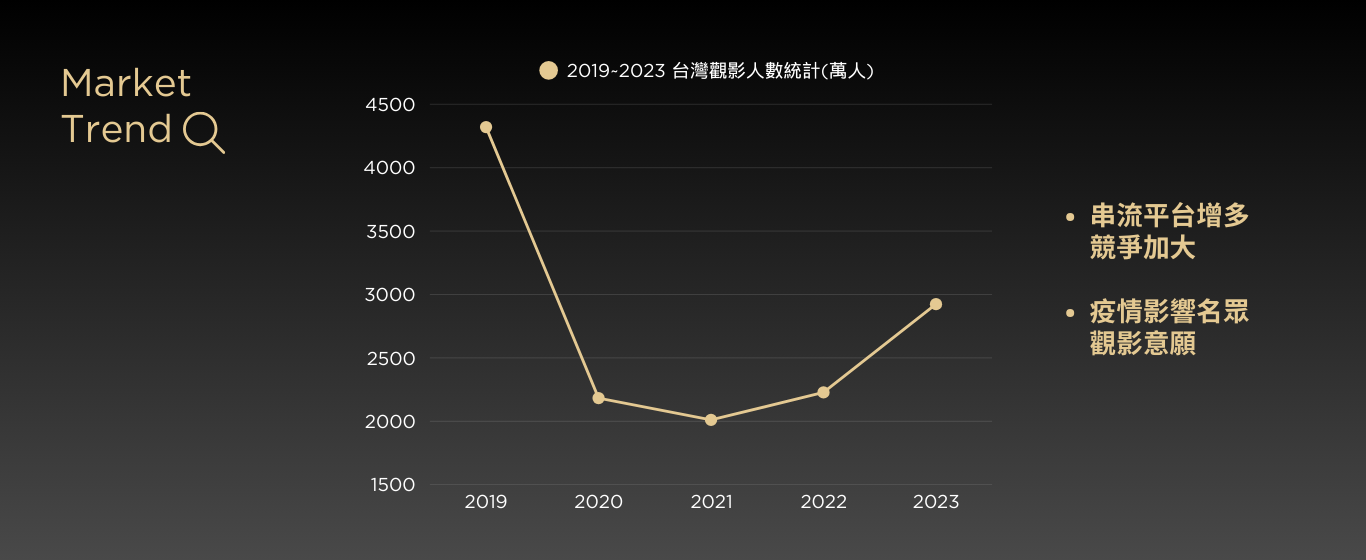
自2019年以來,受到疫情與串流影音平台(如 Netflix、Disney+、HBO)普及的雙重衝擊,傳統影城面臨嚴峻挑戰。根據統計,台灣年度觀影人數自疫情前的高峰大幅滑落,雖然2023年已有回升趨勢,但整體市場仍處於轉型陣痛期。
當觀影行為變得更便利、更個人化、更平價,電影院靠「畫質聲效」與「大銀幕」取勝,也許不再是唯一解方。於是問題浮現:電影院,該如何重拾觀眾的期待?
Since 2019, traditional cinemas have faced fierce competition from both the COVID-19 pandemic and the widespread adoption of streaming platforms like Netflix, Disney+, and HBO. Taiwan’s annual cinema attendance has seen a sharp drop from pre-pandemic highs. Although there were signs of recovery by 2023, the industry remains in a transitional phase.
觀影人數下滑
此外,所在區域電影院數量眾多,形成市場高度重疊的競爭格局。在此背景下,只依賴視聽設備升級與價格促銷,已難以構成長期吸引力。影城必須重新思考「存在價值」,從「看電影功能」場域轉變為「特地去體驗」的目的地。
As viewing becomes more convenient, personalized, and affordable, competing through sound and screen quality alone is no longer sufficient. The key question emerges: How can cinemas regain audience interest?
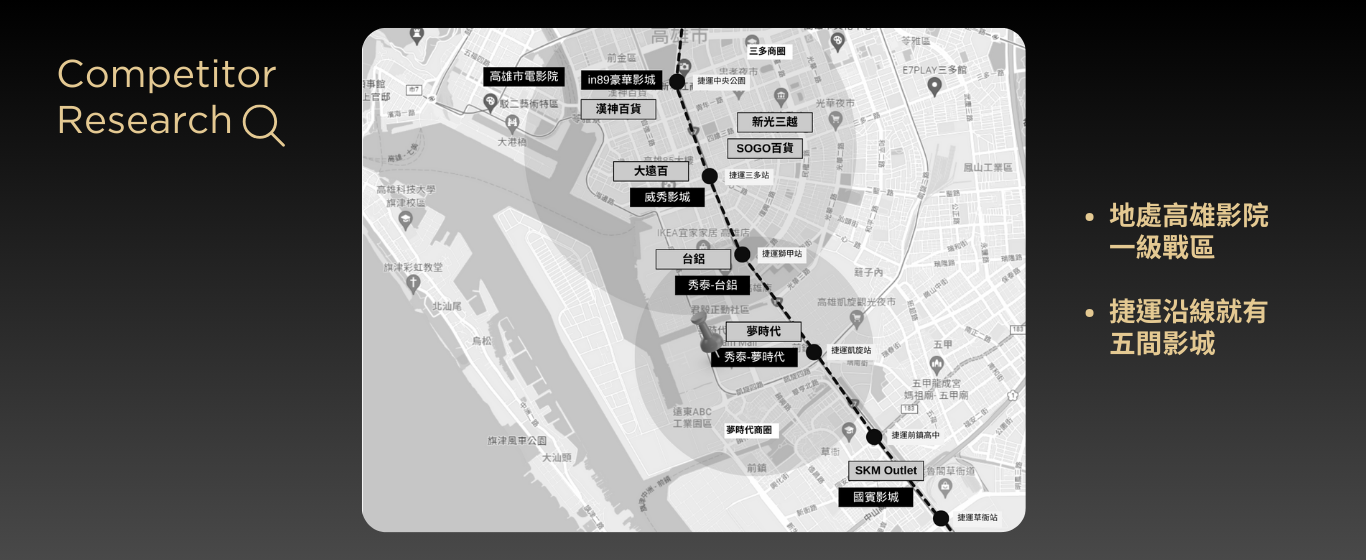
區域競品眾多
二、設計策略:電影變航班、戲院變機場,打造沉浸式觀影旅程 ( Design Strategy: Flights Become Films, Theaters Become Airports – Creating an Immersive Movie Journey )
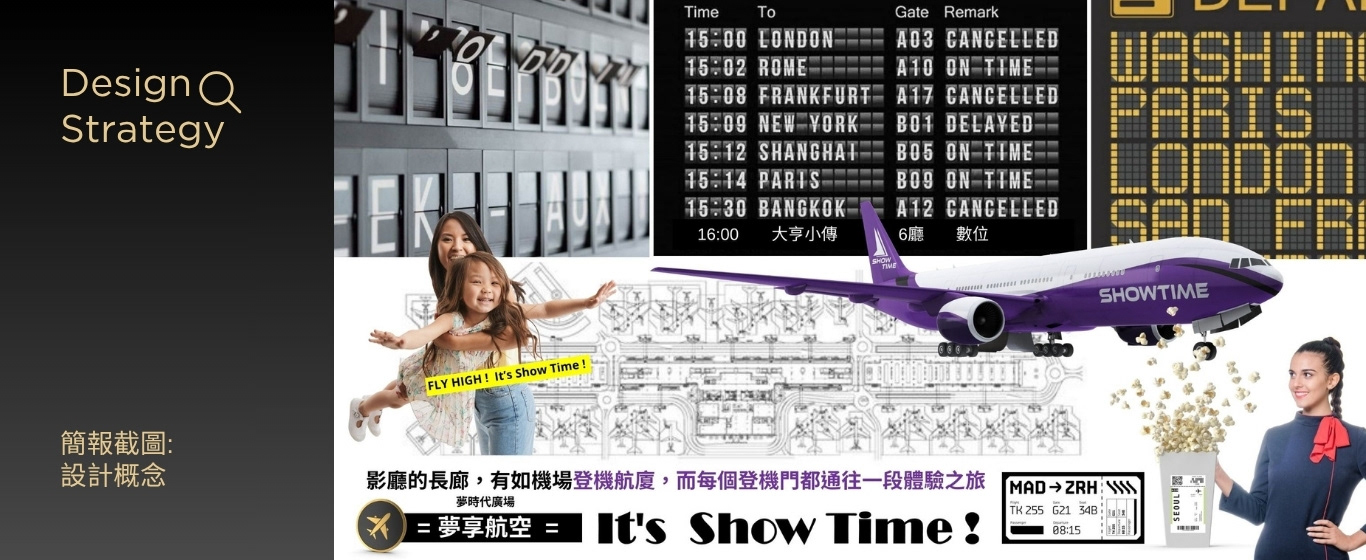
簡報截圖: 概念主題
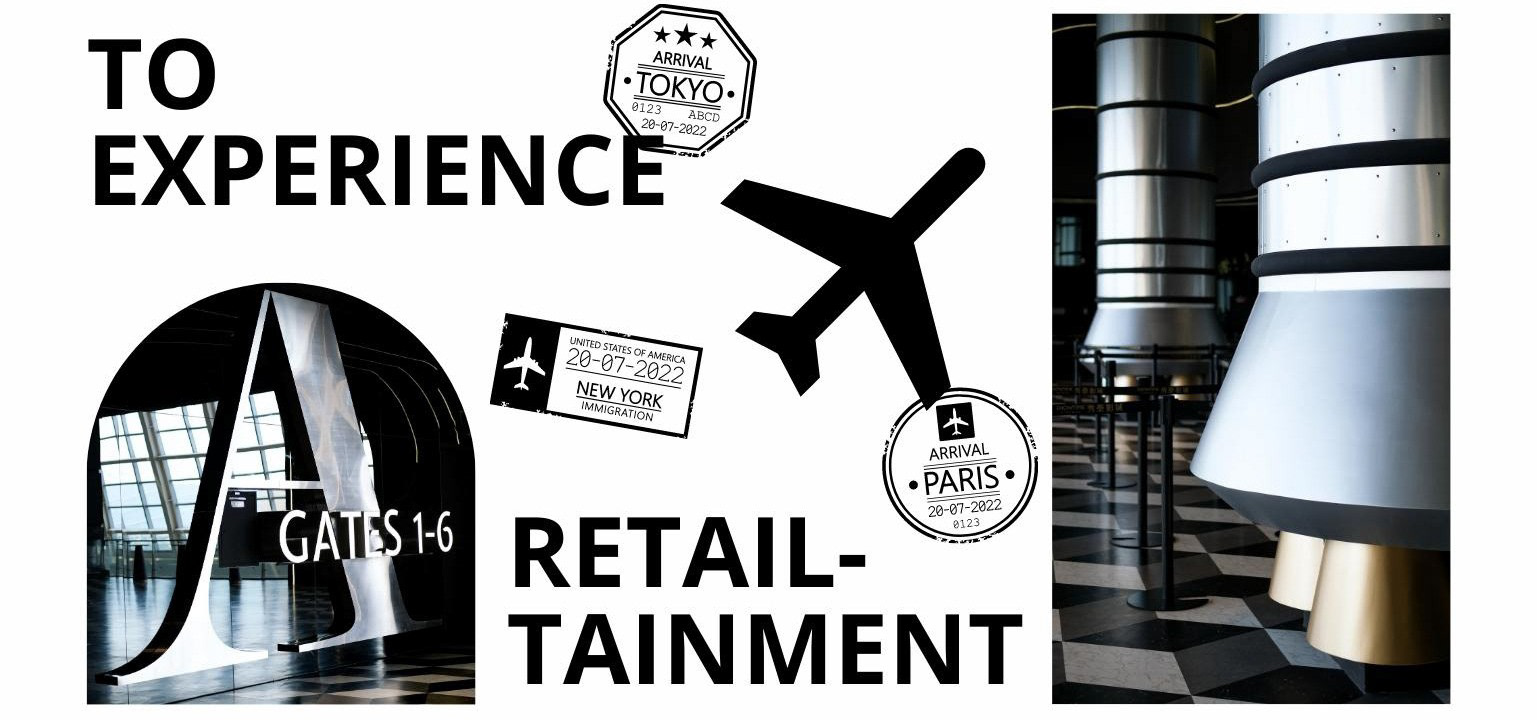
將影城升級為機場體驗場域。觀影不再是進場與離場的傳統流程,而是一段精緻而儀式化的「登機體驗」。這個以「Experience Upgrade!」為主軸的創意設計,從視覺語彙、動線規劃、制服風格到票卡設計,處處融入航空元素,打造沉浸式的故事性空間。
The cinema is reimagined as an airport-like experience space. Watching a movie is no longer a simple in-and-out process, but a refined, ritualistic “boarding experience.” Centered on the theme "Experience Upgrade!", the creative design incorporates aviation elements throughout—from visual language, circulation routes, uniforms, to ticket design—crafting an immersive narrative space.
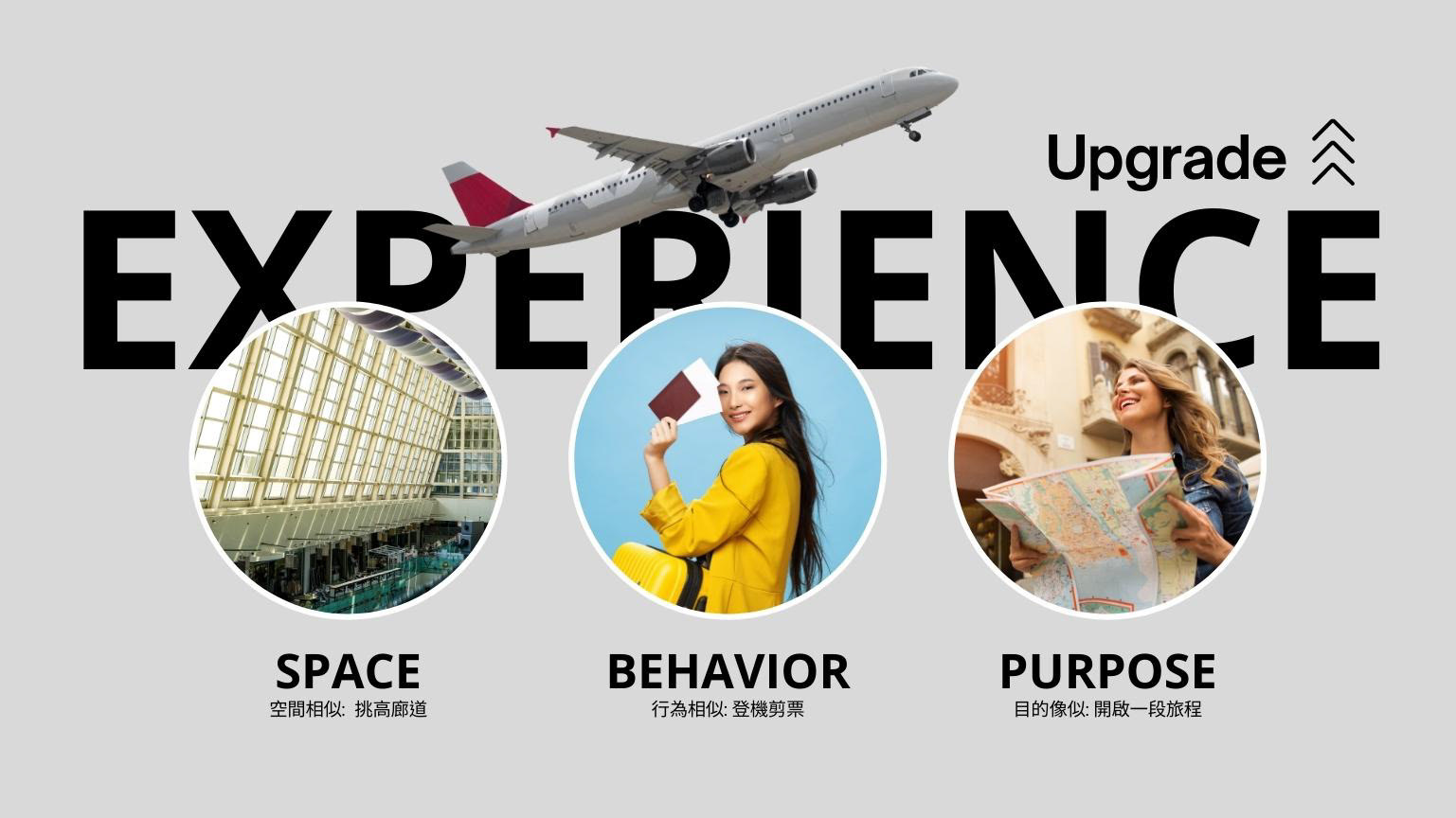
經驗升等
「機場登機」為核心的「沉浸式主題策略」,透過空間、行為與品牌語彙整合,重新定義觀影過程:
● 空間(Space):高挑通透感打造類機場候機大廳,建立期待與開場感
● 行為(Behavior):觀影流程仿如登機劃位、驗票、進艙,強化儀式感
● 目的(Purpose):看電影如啟程,賦予觀影行為一段旅程的情感象徵
The “Airport Boarding” Immersive Theme Strategy redefines the cinema experience through spatial, behavioral, and brand integration:
● Space: High ceilings and transparency emulate the anticipation of an airport departure lounge.
● Behavior: The viewing process echoes airline check-in, ticket scanning, and cabin boarding—heightening the sense of ritual.
● Purpose: Watching a film is reimagined as a journey, giving the act emotional and symbolic meaning.
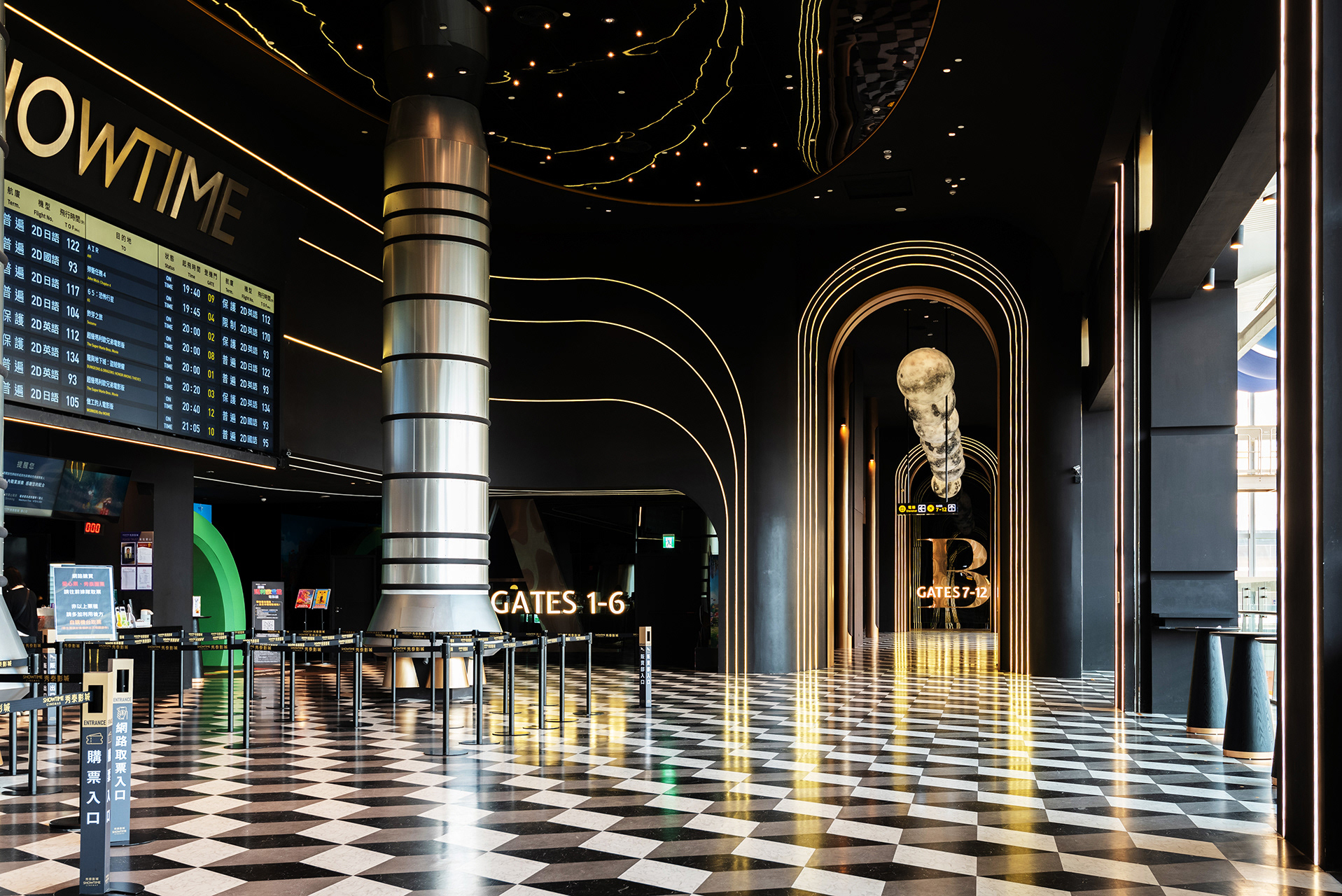
登機門
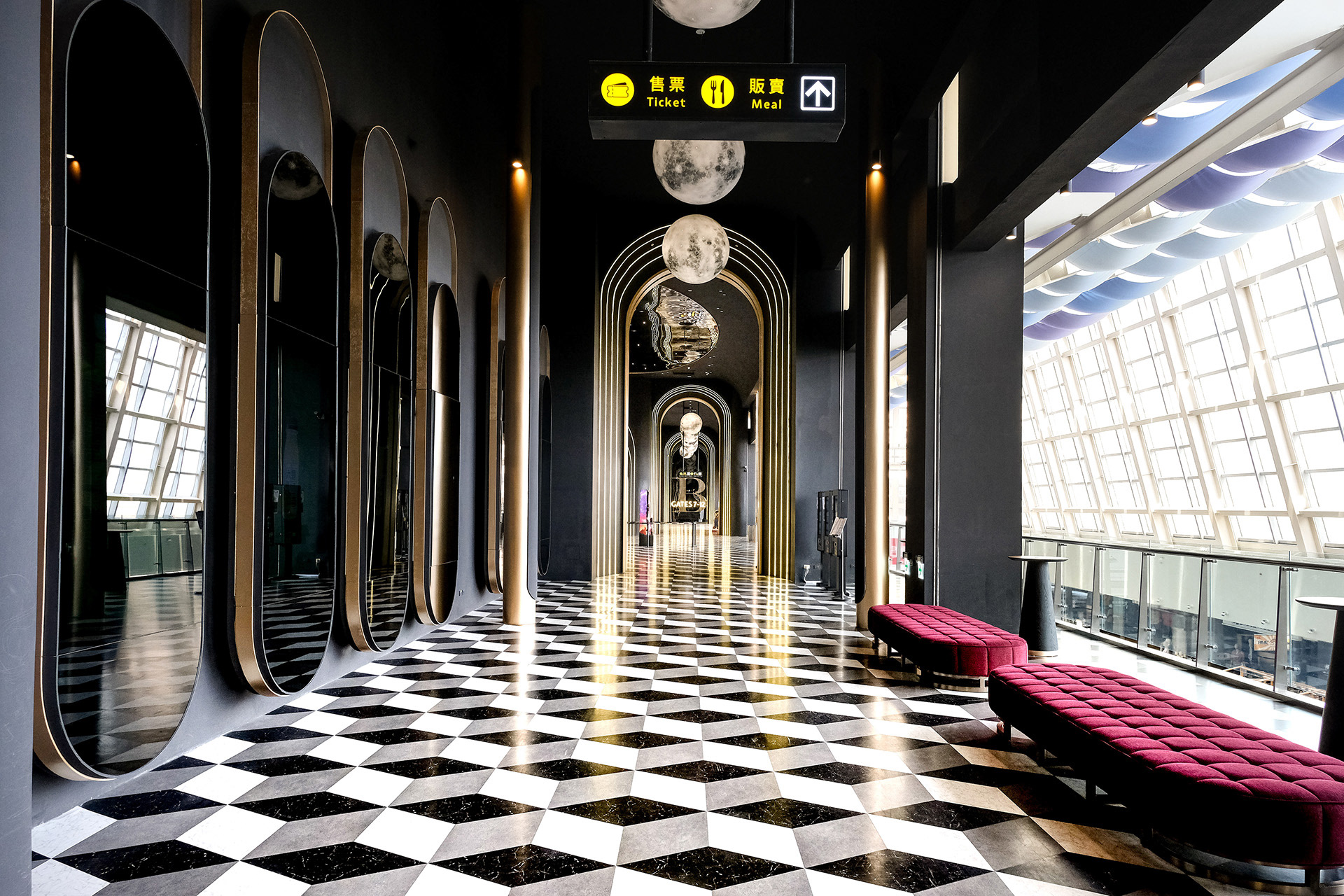
如航廈般的廊道空間
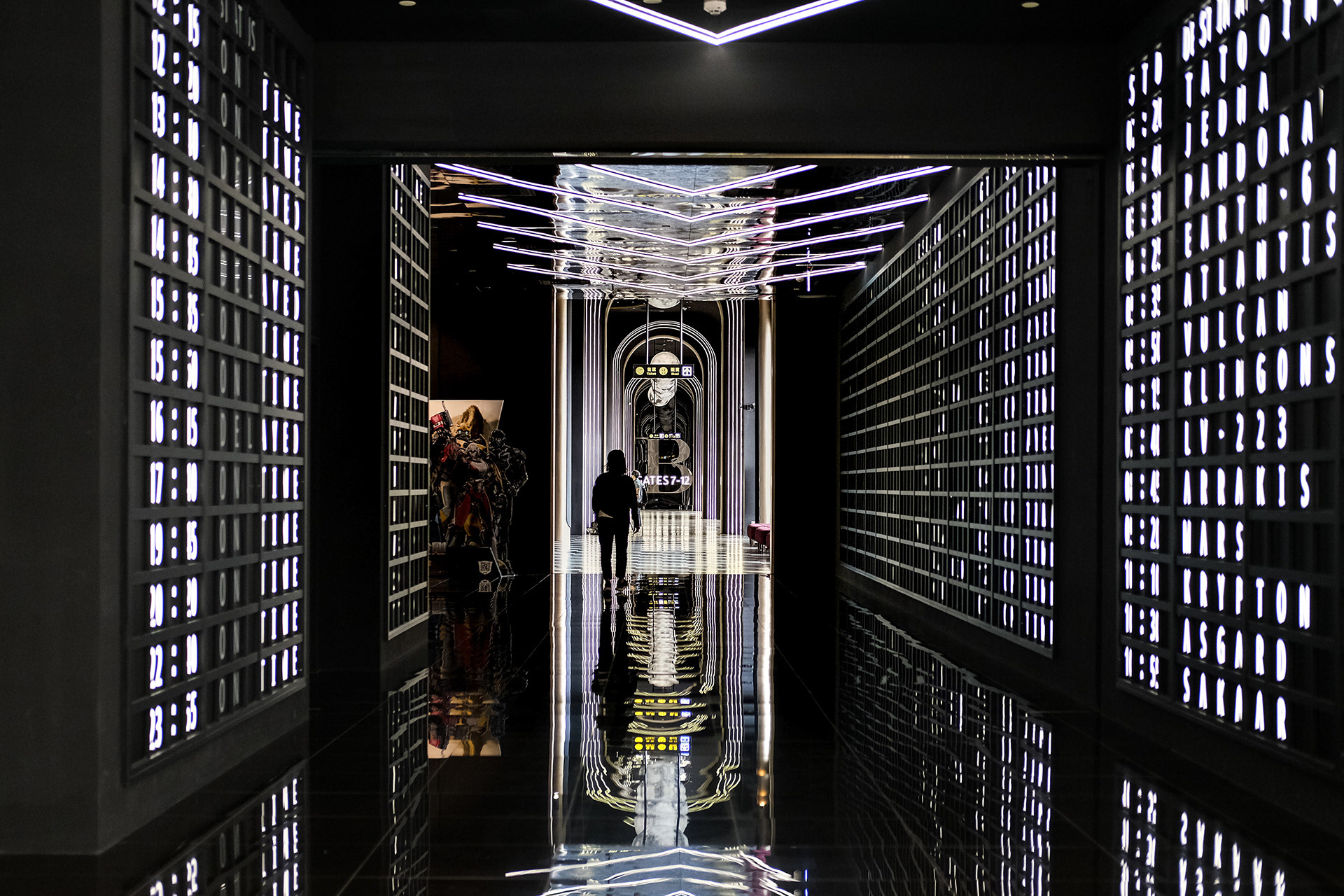
由時刻表構成的打卡牆
三、空間設計 X 行銷策略:主題設計如何成為品牌行銷的推進器 ( Interior Design X Marketing Strategy: How Thematic Design Becomes a Brand Accelerator )
秀泰影城的空間轉型策略中,「機場登機」不僅是一種主題設定,更是一種系統性行銷語言的鋪陳。我們所關注的,不只是如何美化場域,而是如何透過空間建立故事、生成情境,進而為品牌的後續活動提供無限延展的舞台。
In the transformation strategy of Showtime Cinemas, the “airport boarding” concept is not just a thematic choice—it becomes a systemic language for marketing. The focus goes beyond beautifying the space; it’s about storytelling through space, creating scenarios that provide an expansive platform for brand engagement.
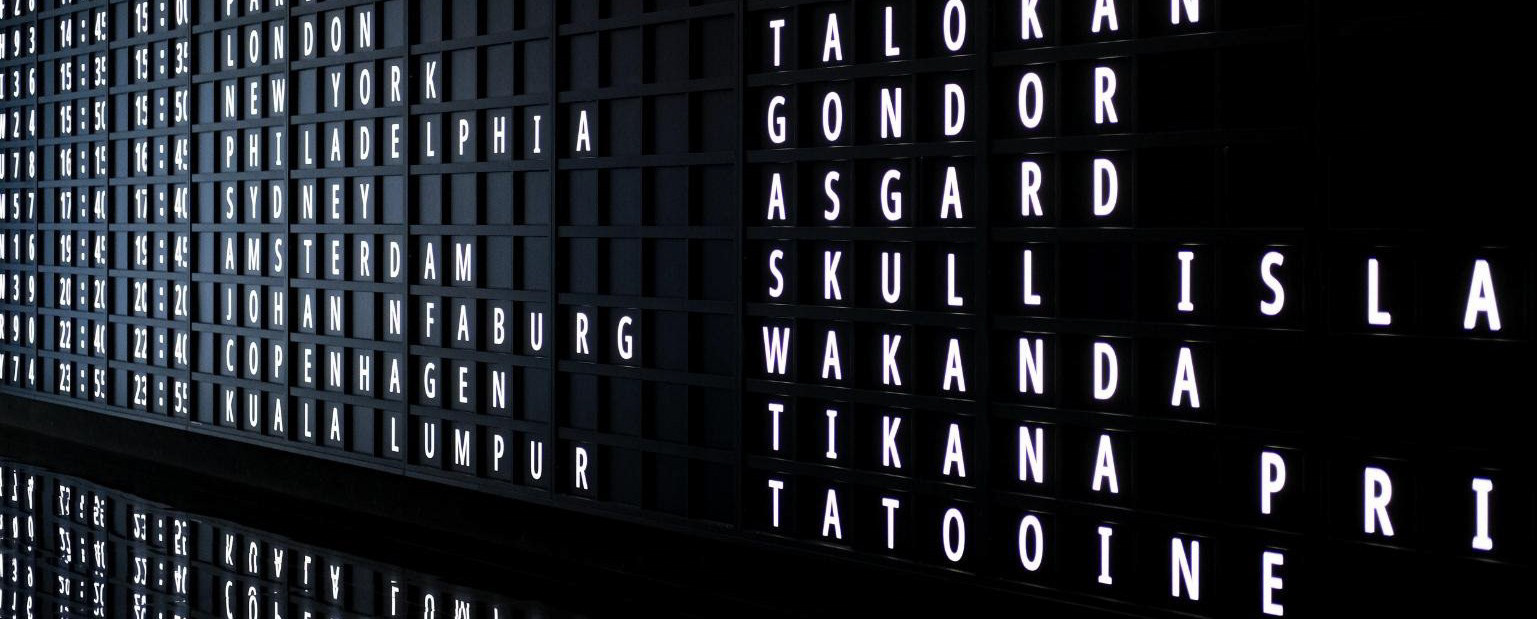
打卡牆上飛往世界各地的航班
當空間設計與行銷之間搭建起一道流暢的橋樑,機場主題的導入不僅是空間語彙的選擇,更是一項能長期支撐品牌活動與營運策略的基礎建設。
當空間本身具備明確情境、強烈象徵與故事張力,後續的行銷活動便不再是外部附加物,而是自然延伸的對話與演出。透過概念主題,使後續的品牌活動、會員機制、商品策略乃至社群操作,都能在這個框架下自然展開。
When design and marketing are seamlessly connected, the airport theme is not just an aesthetic—it's infrastructure for long-term branding and operational strategy.
A space with a strong narrative and symbolic context enables marketing activities to emerge organically, rather than as external add-ons. This conceptual framework supports integrated branding efforts—from themed events and membership systems to merchandise strategies and strategic social media campaigns.
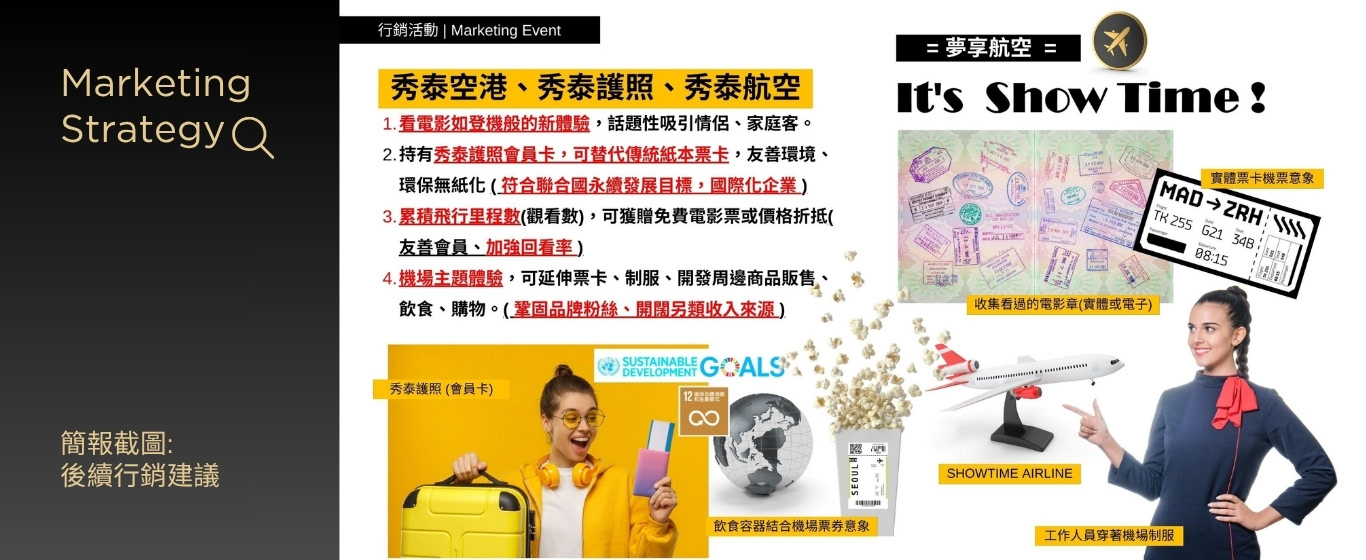
在此案例中,設計所扮演的角色,不再只是「形象營造者」,而是品牌策略的實體化引擎。它讓行銷團隊得以站在已建構好的情境平台上,持續創造內容、展開活動、延伸話題。從設計出發,空間即是媒介,也是一種行銷的起點。
In this case, design does more than craft visual appeal—it acts as a tangible engine for brand strategy. It empowers the marketing team with a ready-made narrative platform, enabling them to continuously generate content, launch campaigns, and extend conversations. Here, design is the medium—and the starting point—for impactful marketing.